Someone tells you the best way to focus is to do your hardest work before opening your inbox. It sounds sensible. It also sounds like one more rule to follow on mornings when you’re waiting for a client to reply.
A habit experiment gives you a way to find out whether the advice fits. For the next ten workdays, try one short focus session before your first routine inbox check. Record whether you started, what moved forward, and whether anything genuinely needed a faster reply. At the end, decide whether to keep the rule, adjust it, or let it go.
This guide shows you how to design a small experiment, track it without turning it into a second job, and use the results to make a decision. You can follow the 14-day plan below or copy the template and start with a question of your own.
What is a habit experiment?
A habit experiment is a short, planned test of one change to your routine. It has an action you can repeat, a finish date, and a question you want to answer. “For the next two weeks, I’ll write a rough paragraph before editing yesterday’s draft” is an experiment. The end date gives you a chance to see whether that ordering makes writing easier to start.
Anne-Laure Le Cunff explores this approach in Tiny Experiments. The useful idea is that you can commit to trying something while staying open about what you’ll learn. The examples in this guide apply that idea to work, learning, and everyday routines.
How habit experiments fit alongside goals and habits
| Approach | What it helps you decide | Example |
|---|---|---|
| Goal | What outcome do I want? | Send a complete first draft by Friday. |
| Habit | What action do I want to repeat? | Draft for a short block each weekday morning. |
| Experiment | What do I still need to learn? | Try drafting before checking messages for two weeks and see whether it helps me get started. |
You can use all three on the same project. Your deadline gives the work direction. The experiment helps you choose a routine. If the routine earns a place in your week, it can become a habit. If you already know what works and simply need to make time for it, you can schedule it without running a test.
When a small experiment is especially useful
Try one when you’re choosing between two plausible routines, when advice keeps failing on the same kind of day, or when you’re unsure whether you like the activity itself. A designer who struggles to start a portfolio might be avoiding a vague task. Someone learning a language might enjoy speaking practice more than another vocabulary app. A short test gives each person something specific to try before they invest more time.
Keep the test reversible. If trying an idea requires a major purchase, a contract, or a change that affects other people’s work, look for a smaller version. You could test whether you enjoy a new kind of work by completing one sample assignment before paying for a course.
How to design a personal experiment
1. Find the moment that keeps going wrong
Pick one recent day and write down what happened in order. “I’m always distracted” gives you a broad problem. “I opened Slack to find a file, read three threads, and started my draft after lunch” tells you when your attention shifted and what you were trying to do.
Look for a similar example from another day. If you find one, turn it into a question. “Would opening the draft first help me make progress before I start replying?” is a question you can test. If the pattern only happened on an unusual day, wait for another example or choose a more common problem.
2. Write down what you expect to happen
A useful prediction has a reason behind it. “If I put the exact next step at the top of the draft the night before, I expect to start faster because I won’t need to reread the whole file.” If it doesn’t help, your notes may show whether the next step was still too vague or whether another commitment took your time.
Decide what would make the change worth keeping. For a writing routine, that might mean starting before your first meeting on most planned days. For an inbox routine, it might mean fewer unplanned checks while still replying to time-sensitive messages. These are criteria for your own decision, so choose something you can observe without guessing.
3. Turn the idea into a small commitment
Use this sentence: “After [cue], I’ll [action] on [planned days] until [end date].”
For example: “After I open my laptop on weekdays, I’ll outline the next section of my draft for 15 minutes before I check messages. I’ll do this through next Friday.”
The cue should already happen, the action should fit a fairly busy day, and the finish should be obvious. Try a smaller action if you’d have to clear an hour, find new software, or rely on someone else before you can begin. On days that need an exception, write down the rule in advance. You might check an urgent support channel before starting if you’re on call.
4. Change one thing you can describe
Suppose you want to know whether silence helps you concentrate. If you also move the session from afternoon to morning and change what you work on, a better result will have several possible explanations. Keep the usual time and type of work, then change the sound.
Some changes naturally come in a bundle. A different work location can change noise, lighting, and interruptions at once. You can still decide whether the location suits you. Be specific about the question you answered. “The library worked better for drafting this week” is easier to act on than “Silence makes me more productive.”
5. Choose a duration that fits the question
A week can be enough to see whether you remember a daily cue. Two weeks can give you two versions of a typical workweek. An experiment that happens every Friday may need a few Fridays before you have enough to compare.
Choose the review date before you begin. If a holiday, family visit, or launch week changes your schedule, note it. If you’re testing a routine for busy weeks, that period may be exactly the one you want to observe. The time limit helps you review the change at a planned point. It does not tell you when an action will become automatic.
How to track a habit experiment without overtracking
Use one record for whether you did the action, one signal for whether it helped, and a short note when context matters. You can write it in a notebook or in a simple table. A daily checkmark tells you whether the routine fit. It takes an outcome signal to tell you why the routine might be worth keeping.
| What to record | Example from a focus experiment |
|---|---|
| What did I do? | Started one 25-minute block before checking the inbox. |
| What moved forward? | Wrote the opening and left notes for the next section. |
| What affected the session? | Had a clear first task because it was set out yesterday. |
| What happened if I missed it? | An early client call used the slot. Tried again the next workday. |
Pick a signal you can explain. “Finished one exercise without looking at the solution” tells you more about a study session than minutes spent watching a lesson. “Had the next section open by 9:15” may be more useful than rating your entire morning out of ten.
A note after the session is usually easier to write than a recap at the end of the week. If you forget to log a day, leave it blank or mark it unknown. A blank entry and a skipped action tell you different things.
A 14-day productivity experiment you can try
Question: Does protecting my first 25 minutes of independent work help me make progress on the task I meant to start?
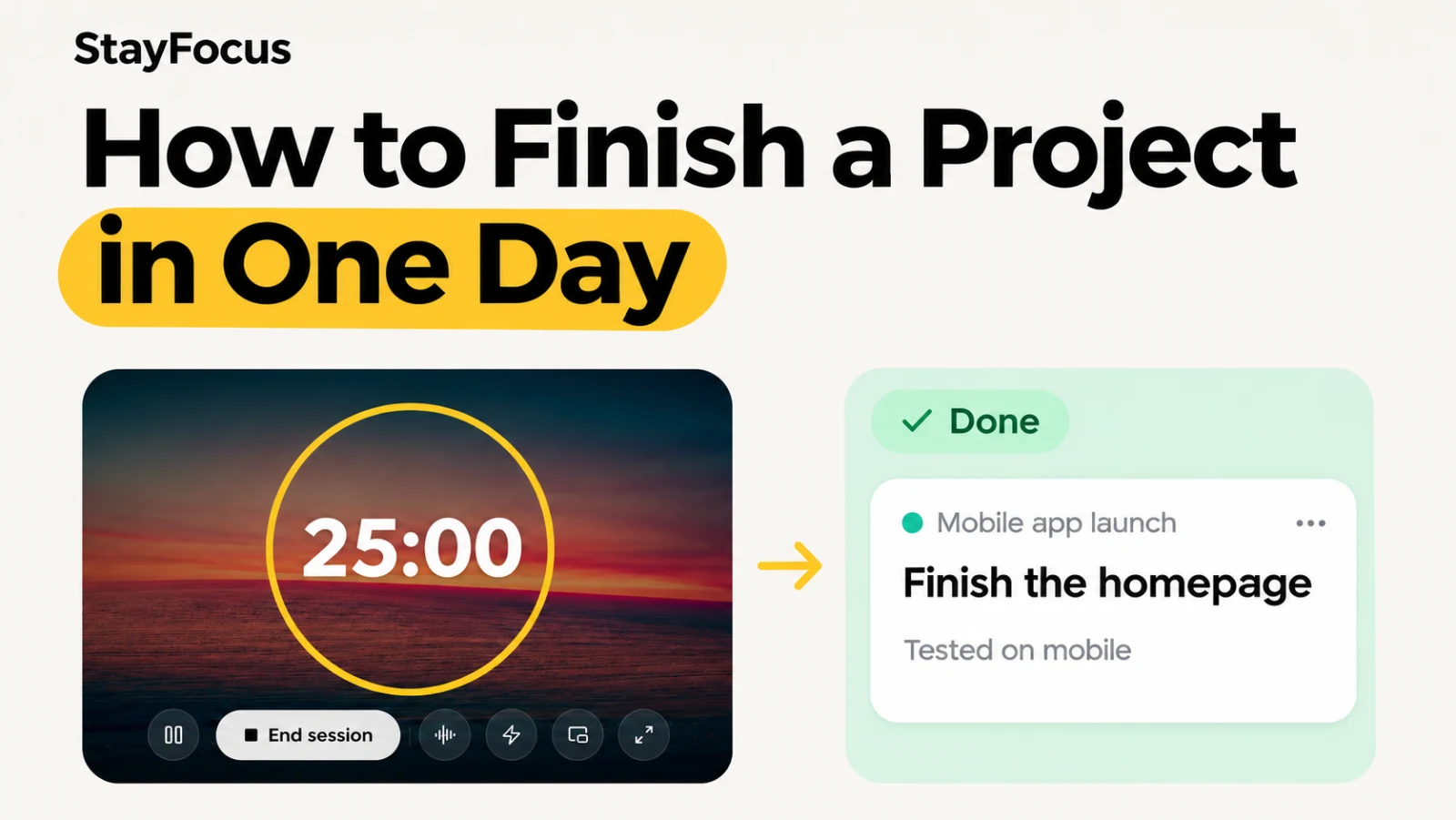
Action: On workdays for two weeks, pick one task and work on it for 25 minutes before opening your routine inbox. If you have an early meeting, use the first available block afterward. Keep any urgent channels you’re responsible for available.
What to track: Record whether you did the block, what you produced, and what got in the way. Define a small result before you start, such as editing one page or drafting the questions you want to ask a customer. Try to use tasks of a roughly similar size.
Before day one
Look at your recent calendar or task notes and write a sentence about how mornings tend to go. If you don’t remember, you can still run the experiment. Treat what you notice as information about this fortnight, with no precise comparison to how you worked before.
Set out the first task and its finish point. “Draft the three questions for Thursday’s interview” is specific enough to start when the timer begins.
At the end of week one
Read your notes and look for a recurring reason you started or missed a block. On days when the block worked, did you know which file to open? On days you missed it, was the problem the inbox, a meeting, or a task that needed a decision first?
If you need to change something midstream, write down the day and what changed. Keeping that detail visible will help you interpret the two halves later. If the same early meeting keeps interfering, for instance, you might test a later slot in the next round rather than quietly blending the two schedules.
At the end of week two
Imagine you did seven of ten planned blocks. You moved a priority task forward on six of those days. All three missed blocks fell on mornings with early meetings. That pattern suggests a specific follow-up: keep the morning block on open days and test a later one on meeting days.
Now imagine you completed all ten blocks but spent most of them deciding what to do. The time was there. The next experiment could be to choose the first action the evening before. Both examples are illustrative. Your own notes should point to the change you try next.
Seven small habit experiments you can adapt
| If you want to learn… | Try this | Look for… |
|---|---|---|
| Whether you can start writing sooner | Draft one rough paragraph before editing on your next five writing days. | Whether you begin sooner and have something to revise. |
| Whether a shorter planning routine is enough | Choose one priority and write its next action at the end of each workday for a week. | Whether you can start the next morning without reopening your whole task list. |
| Whether keeping your phone nearby matters | Put your phone out of reach for the first focus block on five comparable workdays. | Unplanned pickups and any interruptions that still happen. |
| Whether practice changes how you study | Try one short recall exercise before looking at your notes in your next four study sessions. | What you can explain from memory and where you still hesitate. |
| Whether a time slot suits a side project | Try the same short project block on two Saturdays. Pick the file and next step beforehand. | Whether you show up and make a visible change within the time available. |
| Whether a smaller creative goal is easier to sustain | Make one thumbnail sketch on each weekday for two weeks. | Whether starting feels easier and which ideas you want to develop. |
| Whether batching messages fits your team | On days with no urgent coverage duty, group routine replies into two planned windows for a week. | Fewer unplanned checks and whether any conversation needed a quicker reply. |
You can make these tests smaller. If a full writing block is unrealistic, try opening the document and writing the first sentence. If what you want to learn is whether the block produces a complete draft section, keep a duration that gives the task a fair test. Set the action to match the question.
How to review a small experiment and choose what to do next
Start by reading your notes in order. A Plus Minus Next review gives you three places to put what you noticed. Under Plus, write what helped. Under Minus, write what made the change hard or less useful. Under Next, write one action you can take from what you learned.
| Plus | Minus | Next |
|---|---|---|
| I got straight into the draft when the first action was written down. | The block regularly disappeared on meeting mornings. | Keep the early slot on open days and try a slot after the first meeting on other days. |
Once you have a pattern, choose one response:
- Keep it when the change helped and fit your schedule. If the test happened during a quiet period, try it through a more typical week before making it a permanent rule.
- Adjust it when the idea helped under certain conditions. Change the cue, the time, or the size of the action. Pick one adjustment so you can tell what the new version adds.
- Stop or pause it when the trade-off is too high or the change doesn’t help with your original question. Note whether there’s a condition that would make it worth trying again.
Give surprises a place in the review. If moving your phone only made you check messages on your computer, the device may be less relevant than the expectation that you must be reachable. In that case, a follow-up test could be about agreed response windows. A useful result can be a better question.
A habit experiment template you can copy
Question: What am I trying to learn?
Prediction: What do I expect to happen, and why?
Action: After [cue], I’ll [small action] on [planned days].
Dates: From [start date] to [review date].
Exception: If [predictable obstacle], I’ll [fallback or skip rule].
Daily record: Done, skipped, or unknown. Add one result and a short note if needed.
Review: What helped? What made it harder? What will I keep, change, or stop?
Write the question before you write the action. “I want to try mornings” could mean looking for more quiet, testing whether you work faster, or checking whether the time actually fits. Those questions give you different things to track.
Frequently asked questions
What happens if I miss a day?
Write down why and take the next planned opportunity. A missed day can show that a cue is hard to notice or a slot is unpredictable. If you barely got to try the action, run a smaller or better timed version before judging whether the action itself helps.
Do habit experiments have to happen every day?
A weekly review or a practice session twice a week can be a valid experiment. The schedule should match the routine you’d consider keeping. Give it enough opportunities to learn something without stretching the test indefinitely.
Can I run two experiments at once?
You can test a Friday review and a weekend sketching routine if their effects are easy to tell apart. If both changes are meant to help the same morning focus block, try one first. Otherwise it may be hard to tell which one influenced the result.
What if the result is mixed?
Look for conditions that changed. Maybe the routine worked with a specific first task and stalled with a vague one. Maybe it helped on quiet days and cost too much on busy days. A narrow rule that fits part of your week can still be useful.
Run your first tiny experiment with StayFocus
Pick one change from this guide and give it a finish date. In StayFocus, use Experiments to set up a time-limited test and record what you notice in check-ins. The check-ins give you room to write what helped, what got in the way, and what you want to try next. At the end, use those notes to decide whether the routine has earned a place in your week.
If the change involves focused work, try the first session with the free online Pomodoro timer. Choose a task you can start right away and write down what changed when the timer ends. That gives you your first observation while it’s still fresh.